Daily resets and the accumulation of memory
Even If This Love Disappears From the World TonightDaily resets and the accumulation of memory describes the novel’s central paradox of continuity: Maori Hino cannot reliably carry the events of one day into the next, but experience does not therefore become meaningless or wholly lost. Written records let each new day begin with knowledge of the previous one, while affection and other traces persist in ways that exceed what she can consciously recall. The idea eventually widens from daily life to bereavement: records can preserve a relationship, but remembering someone can also become a choice made long after those records have been altered or removed.
The Daily Reset and Its Records
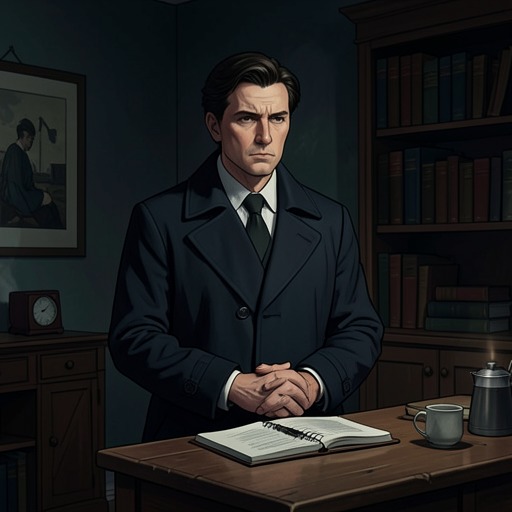
Maori’s condition makes an ordinary timeline discontinuous. As Tooru Kamiya recognizes, each day’s version of Maori exists only for that day; without a record of her actions, her passage through the world would vanish from her conscious account. The distinction is not merely between remembering and forgetting. For Maori, failing to write things down means losing the evidence that a day happened at all, so her journal and binder become practical supports for a life that cannot accumulate experience in the usual way.
The written account lets one day reach the next without giving Maori direct access to the memories it describes. She can read that she rode a bicycle with Tooru the day before, and find herself wanting to ride again. When they repeat the outing, it can feel new to her even as Tooru knows they have done it before. On a third day, she again chooses the ride after reading the previous day’s entry. Repetition is therefore both a reset and a form of continuity: Tooru shares the history that Maori cannot retain, while the record helps her act on what an earlier version of herself enjoyed.
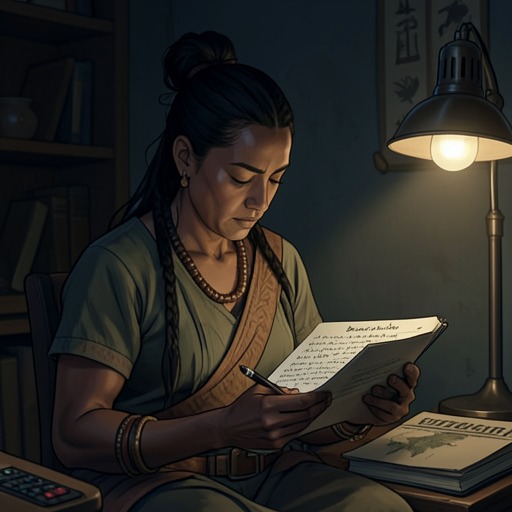
The entries do more than supply facts. After reading her recent journal, Maori blushes at the giddy language her earlier self used about her boyfriend. A page labeled “My Boyfriend” and a phone folder with the same label guide her to photographs and videos of Tooru. In one recording, filmed while they ride together, she hears her own flirtatious voice and sees how much fun they are having. The images make the past legible, but they cannot make it hers in the same way it was for the person in the video. Watching, she feels a wistful longing for yesterday’s self.
Feeling Across the Break in Memory
That distance does not eliminate emotional response. When Tooru meets her as someone she does not remember, Maori finds his acceptance natural and feels at ease with him, even in silence. She knows him through information she has recorded and through the memories he carries of their time together; his gentle attention allows a relationship to be present even when its shared past is inaccessible to her. The novel thus distinguishes factual recollection from the comfort and recognition that can arise in an encounter.
After spending time with Tooru, Maori’s resentment toward the happy past described in her diary gives way to sympathy for the earlier self who wrote it. She understands that yesterday’s Maori also felt the pain she feels now. More surprisingly, seeing the boyfriend who should be a stranger makes her heart throb. She wonders whether feelings can remain when information cannot, and admits that she may be beginning to like him. The daily reset does not prove that affection is a complete substitute for memory; instead, it exposes a gap between what Maori knows and what she feels, and leaves that gap active in her developing relationship with Tooru.
Records as Shared Care—and Erasure
The novel later gives records a more troubling role. After Tooru dies, his sister offers to type Maori’s binder and journal into a computer and repair the places where he is removed. Izumi Wataya collects the paper volumes and transfers the revised digital journal and notes to Maori’s laptop. The sister has added entries for the days since Tooru’s death and falsified the folders’ and documents’ timestamps, so the new record can serve as Maori’s account of her daily life. Izumi also replaces her phone and arranges for the past messages referring to Tooru to become inaccessible.
This intervention is intended to protect Maori while she is recovering, but it makes clear that a written life is vulnerable to other people’s decisions. The records that once helped her carry information across daily resets can be edited to exclude a person, and photographs, messages, and journal entries are not neutral containers: what they preserve or omit shapes what she can know about herself. While replacing Maori’s reminder slips, Izumi finds a sticky note on the back of one: “Even if I recover, always remember Tooru Kamiya. The important things will always be in an important place.” Its hidden position suggests that Maori meant to encounter it upon recovery. Whether she anticipated the alteration of her records or simply wanted to express the strength of her feelings, the note survives as a counter-instruction to forgetting.
From Preserved Traces to Chosen Memory
After Maori recovers from amnesia, Izumi initially conceals the truth about Tooru. When Maori asks about a drawing, Izumi describes him as a boy she saw a couple of times at the library during summer break in high school. She knows the risk of depression associated with the amnesia is gone and believes Maori could eventually get past the pain if she learned the truth, but she still cannot decide what is best. This hesitation keeps recovery from becoming a simple return to a complete archive: Maori’s records have been changed, and the people who know the story must choose whether and how to tell it.
Maori later considers whether photographs and videos could help her remember Tooru, but fears that images might overwrite her own emerging impression of him. She agrees instead to listen to audio extracted from a video. At first she hears rattling, her happy squeals, and wind; then she remembers insisting that they ride a bicycle together. The sound supplies a specific route into recollection, but the memory arrives through a sensory fragment rather than through a complete visual record. Media can prompt remembering without making recovery instant or exhaustive.
Maori chooses to keep trying. She tells Tooru’s sister that she wants to gradually remember him, even as other people gradually forget him, and accepts that the attempt may hurt. She also promises not to become captive to the past or neglect her own life. The sister urges her, if someone who loves her enters her life, to love that person wholeheartedly and put Tooru behind her. Maori cannot yet name what she and Tooru shared, but the journal’s account of his giving without asking for anything in return informs her sense that their past may have been love. Remembering and moving forward are presented as obligations to negotiate, not as mutually exclusive choices with an easy resolution.
Three years later, Maori is in her fourth year of university and still looking for Tooru in the places they visited and the activities they shared. The journal and Izumi’s stories have helped her search, but they have not made recollection simple. She has gradually remembered him, and her later sketchbook contains drawings Izumi has never seen: Tooru in expressions different from those in the old sketches. They are pictures of Tooru as Maori remembers him. The drawings make her recovery visible as an act of creation, not merely the discovery of information kept intact elsewhere.
At the cherry-blossom park, Maori draws while memories of her time with Tooru return. She recognizes that she loved him and that he is gone, but describes the memories as sleeping in her body and heart, available through remembering. She does not claim to have recovered everything; instead, she understands that their continuing bond can help them live together in memory while leaving room for future happiness. Her tears hold pain and warmth at once. The novel’s final movement therefore does not restore an unbroken past. It shows memory accumulating through incomplete records, bodily response, other people’s stories, and Maori’s own drawings—and through her decision to keep remembering without surrendering the life still ahead of her.